Alyssa Castillo
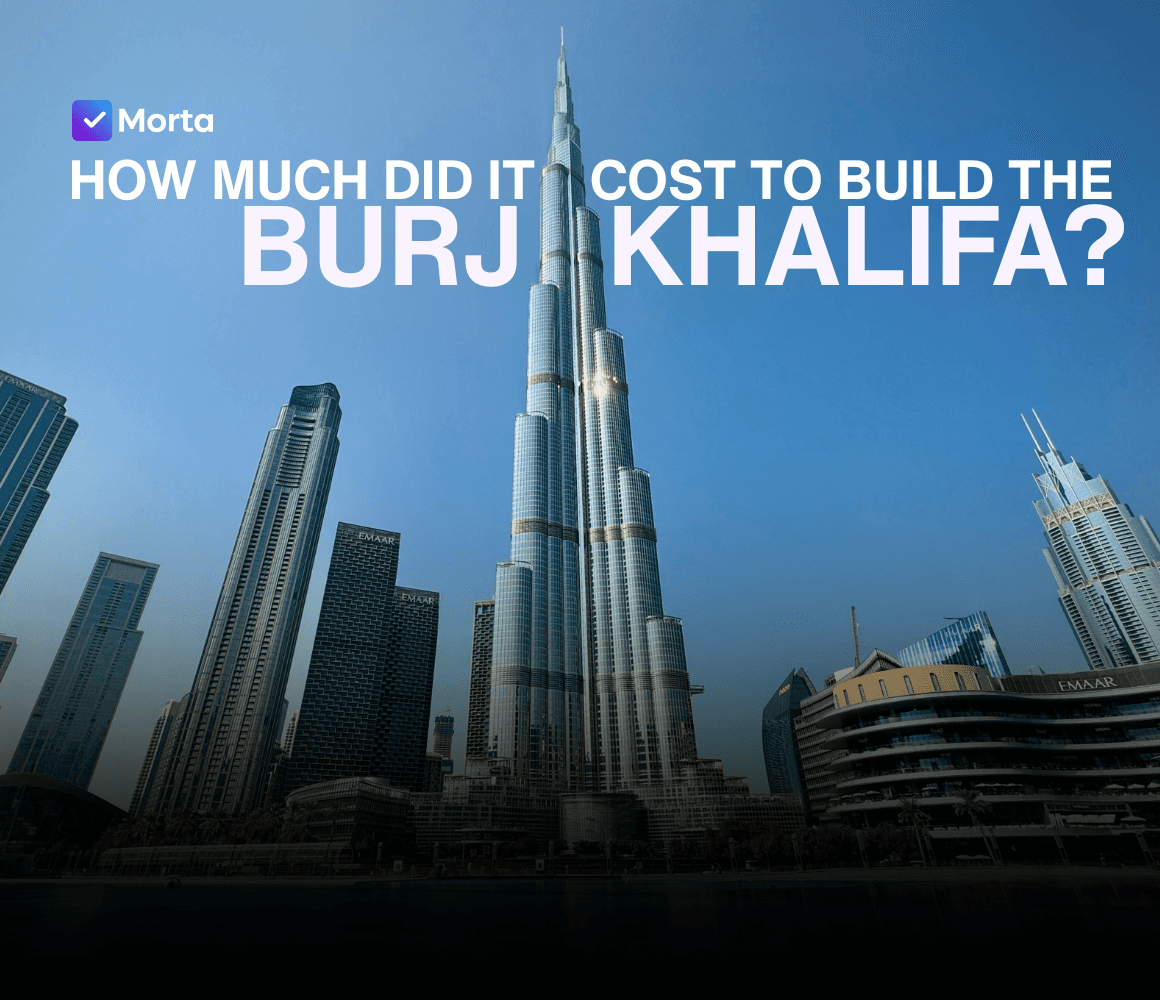
If you search “how much did the Burj Khalifa cost to build”, you will see the same number repeated almost everywhere. Around $1.5 billion.
It sounds definitive. It feels complete.
But for anyone involved in property development, that number is only the surface.
Because the real story is not just how much it cost to build the Burj Khalifa. It is how that cost was managed, controlled, and delivered across one of the most complex construction projects ever attempted.
This is where the value sits. And it is exactly where most developers, whether working on a small scheme or exploring property flipping, can learn something practical.
Try Morta for FreeThe widely accepted figure is:
This figure refers specifically to the tower itself, not the entire Downtown Dubai district.
That distinction matters.
The surrounding development, including infrastructure, public spaces, and nearby assets, cost billions more. When people reference the Burj Khalifa cost, they are usually talking about the tower alone, not the full ecosystem built around it.
For developers, this is a familiar concept. The difference between project cost and area-wide investment can change how profitability is understood entirely.
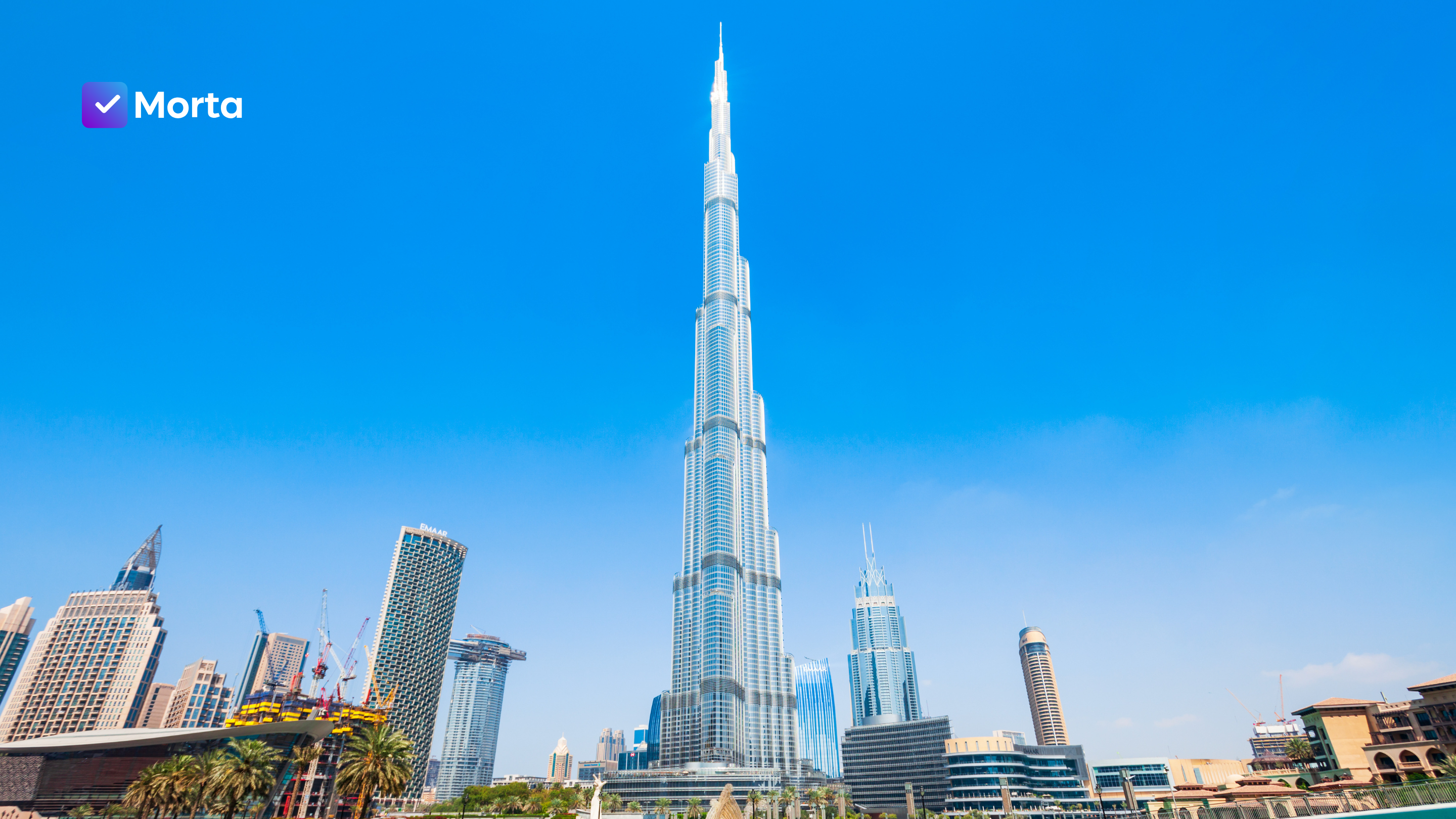
The cost of the Burj Khalifa was not driven by a single factor. It was the result of layered complexity across engineering, logistics, materials, and time.
At 828 metres, the Burj Khalifa required a completely different approach to structural design.
The tower uses a buttressed core system that stabilises it against wind forces and vertical load. This was not just an architectural decision. It had direct cost implications across materials, labour, and construction sequencing.
Concrete alone became a challenge. It had to be pumped to extreme heights under controlled conditions, often during the night to manage temperature and curing.
Even at a much smaller scale, structural decisions can shift costs significantly. At this level, every adjustment carries weight.
At peak construction, more than 12,000 workers were active on site.
That introduces an entirely different layer of cost beyond wages. Labour at this scale requires systems.
You are managing movement, safety, scheduling, and productivity across multiple contractors at once. If one part slows down, everything behind it is affected.
This is where many developments begin to lose control. Not because of a single mistake, but because coordination is not tight enough.
The Burj Khalifa required vast quantities of materials, including hundreds of thousands of cubic metres of concrete and tens of thousands of tonnes of steel.
But volume is only part of the story.
Timing is what drives cost.
Materials arriving too early create storage and handling issues. Arriving too late stops work entirely. The success of the project relied on precise procurement and sequencing.
This is something developers face daily. Not at the same scale, but with the same consequences.
Designed by Adrian Smith at Skidmore, Owings & Merrill, the Burj Khalifa went through multiple design refinements throughout its lifecycle.
Design is rarely fixed in property development.
Changes happen. Requirements shift. Market positioning evolves.
Every design adjustment impacts cost, programme, and coordination. Without proper control, these changes accumulate quietly until they become a financial problem.
Construction of the Burj Khalifa took place between 2004 and 2010, cutting directly through the global financial crisis.
This introduced pressure across:
The project did not just need to be built correctly. It needed to remain viable during a period where many developments stalled or failed entirely.
For developers today, this is one of the most relevant lessons. Market conditions are rarely stable, and cost is only one side of the equation.
The Burj Khalifa was never just a cost-heavy structure. It was designed as a long-term revenue generator.
It generates income through residential units, commercial space, hospitality, and tourism. The observation decks alone contribute to ongoing revenue.
This is how developers should think about cost.
Not as a fixed number to minimise, but as part of a broader strategy tied to long-term returns.
You do not need to be building a skyscraper to face the same challenges.
Whether you are managing a mid-sized scheme or working in property flipping, the structure of the problem is similar.
One of the biggest misconceptions in development is that cost is something you set at the beginning and review at the end.
In reality, cost is constantly moving.
It changes with design updates, contractor performance, procurement timing, and external market conditions. Without live visibility, it is easy to lose track of where the project actually stands.
A project rarely fails because of one major issue.
It is usually the result of multiple smaller gaps. A delayed approval. A missed update. An outdated cost plan.
Individually manageable. Together, they impact programme and margin.
The Burj Khalifa required tight coordination across thousands of moving parts. Smaller developments require the same discipline, even if the scale is different.
In property flipping especially, speed defines profitability.
If you can assess deals faster, make decisions quicker, and execute without delays, you create more opportunities.
If you move slowly, the market moves ahead of you.
The Burj Khalifa was not delivered by waiting on information. It was delivered through structured workflows and constant oversight.
This is where the industry is changing.
Developers are moving away from fragmented tools and towards systems that reflect how projects actually operate.
Instead of juggling spreadsheets, emails, and disconnected platforms, property development software brings everything into one place.
This allows developers to:
It is not about adding another tool. It is about removing friction.
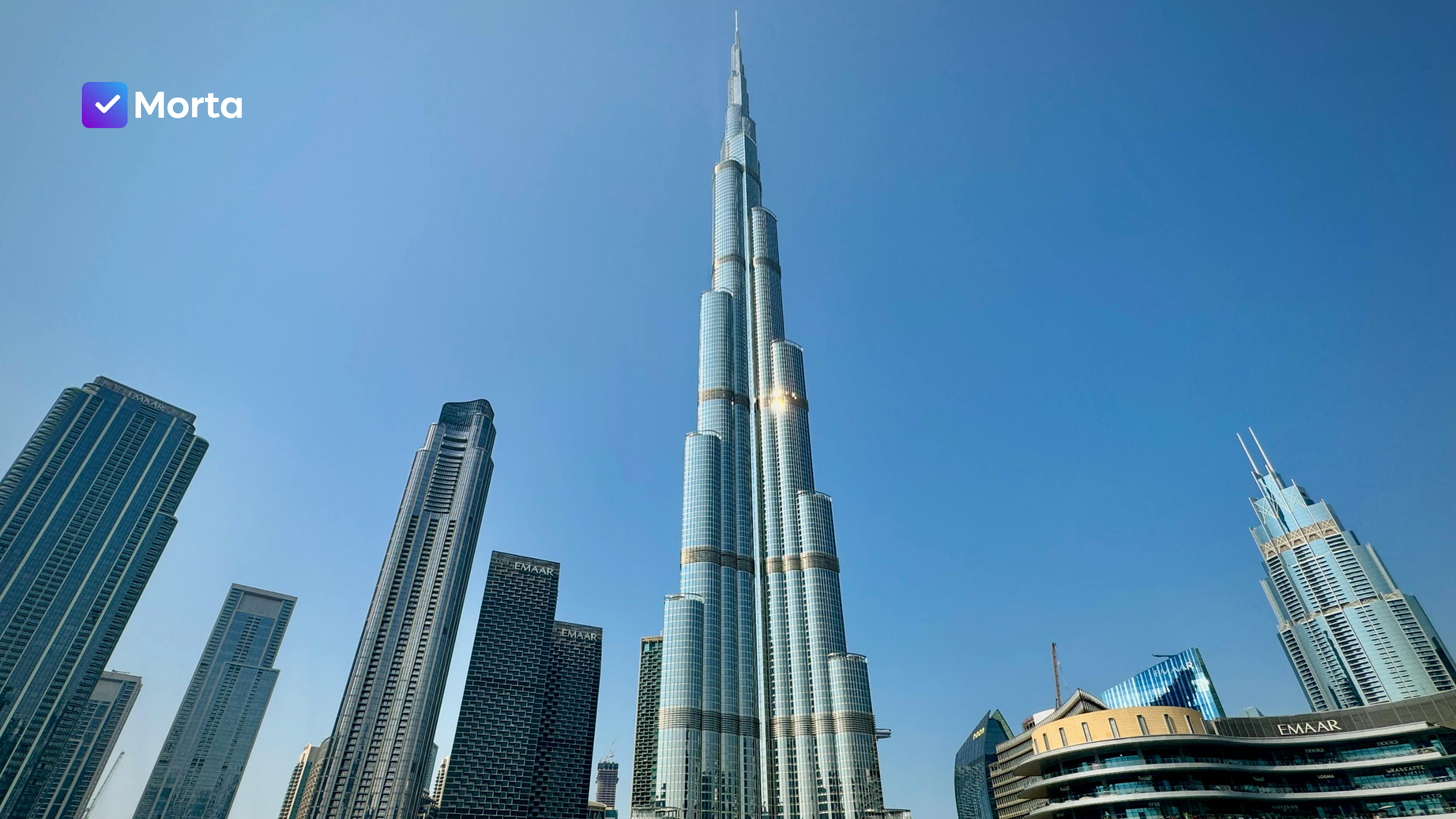
If you look at how the Burj Khalifa was delivered, it relied on structure, visibility, and control across every stage.
Today, platforms like Morta bring that level of control into a single system built specifically for developers.
Morta is not generic project management software. It is designed as software for property development, which means it reflects the actual lifecycle of a project.
From early feasibility through to delivery and handover, everything connects.
You are not switching between tools or rebuilding data across different systems. You are working within one environment where decisions can be made with confidence.
Take a simple scenario.
You are assessing a new site.
Traditionally, this might involve building a feasibility model, sharing it across email, waiting for feedback, and updating multiple versions.
With Morta CRM, that process becomes more direct.
You can run appraisals, adjust assumptions, and share outputs within the same system. Decisions happen faster because the information is already structured.
That is where time is saved. And in development, time is closely tied to cost.
The $1.5 billion figure is accurate, but incomplete.
The real cost includes everything that allowed that number to stay under control.
It includes planning, coordination, decision-making, and the ability to adapt under pressure.
Most importantly, it includes having systems in place that prevent small issues from becoming major problems.
That is the part most developers overlook.
The Burj Khalifa is often seen as an exception. Something too large and too unique to compare with everyday development.
But strip away the scale, and the fundamentals remain the same.
Clear financial oversight. Strong coordination. Fast, informed decisions.
These are not skyscraper principles. They are development fundamentals.
The difference today is that developers no longer need massive infrastructure to operate this way.
With platforms like Morta property development software, the same level of control becomes accessible, whether you are managing a single project or an entire pipeline.
And in a market where margins are tighter and risks are higher, that level of control is what separates projects that work from those that do not.
© 2026 Morta. All rights reserved.